
-
Figure 1 Religious Belief may lower when viewed through the prism of System 2
When deciding, one either processes the decision using System 1, the ‘Gut feeling’ or System 2, an analytical method. Kahneman (2011), suggests that when System 2 is kept busy System 1 has more influence on behaviour. Part of a psychological experiment which involved a participant remembering a long list of digits and being offered chocolate cake or a fruit salad, returned a significant number of participants who choose chocolate cake. From this ‘chocolate cake’ result we can suggest that as System 2 was busy, System 1 selects the easy rather than healthy choice.

-
Figure 2. System 1 activation
System 1 and System 2 have been studied with regard to the cognitive underpinning which ensures a continued faith. Gervais and Norenzayan (2012), conducted an interesting experiment, participants completed a survey measuring religious beliefs. By presenting the survey in (a) clear font (b) difficult to read font, the difficult to read font survey returned, showed lower religious belief. This suggests that being more analytical (in having to read closely) leads to switching to System 2. Here System 2 appears to process the presented information in a cognitively different manner, leading to a lowering of religious belief.
-
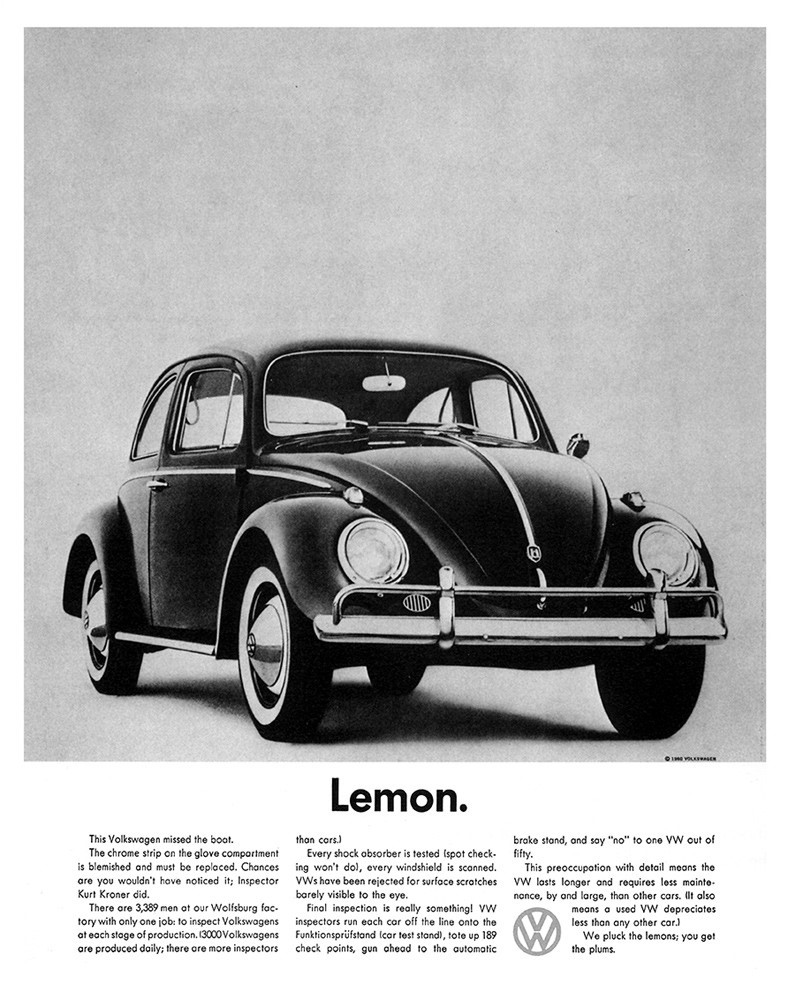
Figure 3. System 2 activation
Advertisements utilize both systems. This VW car is advertised as being a Lemon, this generates a question: Why on earth would a car manufacturer call their product a ‘Lemon’? Further reading informs of dedicated quality control and explains the stringent methods utilised by the company. A bill board on a motor-way has to deliver a quick sharp message as the information has to be processed quickly, typically using System 1.
When adverts generate a positive effect, such as viewing a cute puppy or a piece of jewellery worn by a celebrity System 1 is responding. Adverts which generate an analytical approach such as the VW advert above appeal to System 2.

- Figure 4. This pup signals positivity and immediate gratification: System 1

-
Figure 5. Gerald Ratner after devaluing his products. By addressing System 2 which prevented impulse buys System 1.
One lesson which may be learnt by understanding the System 1 and System 2, concept, is how one is able to affect behaviour in your customer base in a dramatic fashion. Have you heard the phrase: “Doing a Ratner” ? A successful businessman with a chain of ‘low-end’ jewellery shops may have been activating System 2 when he remarked ‘on record’ that his product was ‘total c**p’, further and more salient, mocking his line of cut-glass sherry decanter with six glasses and a silver-plated tray your butler can serve you drinks on all for £4.95. Then to add further information for System 2 to compute, remarked that though the earrings were cheaper than a prawn sandwich they probably would not last as long. It seems reasonable to suggest that had Mr Ratner promoted his Jewellery addressing System 1 remarking: “Our latest line is an all time bargain suitable for all age groups” or “We can produce jewellery cheaply because of our high output” the company would have profited. Sadly the Ratner group lost an estimated £500 million, possibly because of a lack of understanding of these two behaviour modification systems retrieved from: https://en.wikipedia.org/wiki/Gerald_Ratner.
A problem with the customer being enlightened by encouraging an analysis of the product in this instance, was that the situation was irreversible. Rather than buy a tacky piece of Jewellery at lunch time, why not have a prawn sandwich which offers greater value? The customer was drawn away from impulse buying to reflective thinking and may have considered themselves above the level of purchasing goods not fit for purpose.
References
Gervais, W., & Norenzayan, A. (2012). Analytic Thinking Promotes Religious Disbelief. Science, 336(6080), 493-496. doi: 10.1126/science.1215647
Grewal, D. (2012). How Critical Thinkers Lose Their Faith in God. Scientific American, 307(1), 26-26. doi: 10.1038/scientificamerican0712-26
Kahneman, D., & Egan, P. (2011). Thinking, fast and slow. New York: Random House Audio.
Muramoto, O. (2004). The role of the medial prefrontal cortex in human religious activity. Medical Hypotheses, 62(4), pp.479-485.
Shenhav, A., Rand, D. and Greene, J. (2012). Divine intuition: Cognitive style influences belief in God. Journal of Experimental Psychology: General, 141(3), pp.423-428.
https://www.communicus.com/system-1-advertising-impact/
Figure 5 https://img.dailymail.co.uk/i/pix/2007/11_01/gratnerREX0211_468x333.jpg
Figure 3 http://toderash.net/wp3/wp-content/uploads/2011/10/lemon-vw
Figure 2 http://adsarchive.com/wp-content/uploads/2014/11/mouthtunnelst.jpg
Figure 1 http://deolaonline.com/wp-content/uploads/2015/05/474666679_0ec3754b56.jp
https://www.telegraph.co.uk/news/2017/09/17/gerald-ratners-wife-told-not-make-joke/
https://en.wikipedia.org/wiki/Gerald_Ratner.

 Religiously Consuming

