
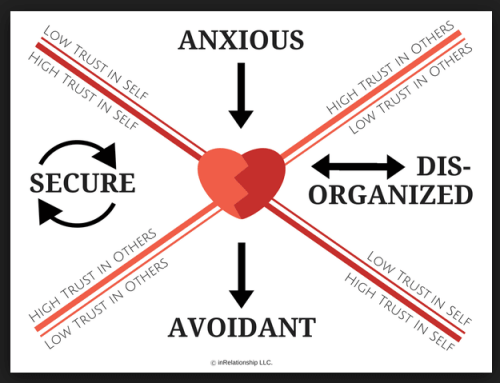
Buddhist teachings propose that all suffering derives from attachment which includes items, people, ideas and pleasure. Komagata (2010), studied Attachment Theory and how this theory sat with Buddhism. One finding: ‘Secure Attachment and Non – Attachment’ are compatible entities, in that both point in the same direction, there is no contradiction. Both positions of attachment are reputed to lead to well-being.

In recognising the similarity between secure attachment and non-attachment, notions such as the middle way, impermanence and the not-self, appear relevant to both forms of attachment. Mindfulness and Buddhism promote a state of being in which one becomes a watcher. The ‘watcher within’ allows desires to come and go, and avoids clinging to any one desire. By allowing desires to pass, craving is gradually eroded. Craving is regarded as the road to misery.
There would appear to be a contradiction in the motion that both Mindfulness and Buddhism promote non – attachment, most notably with mindfulness and the consumer. However, the view that one eschews all chattels and ‘takes to the robe’ to achieve non-attachment is an extreme example. Rather, the intrinsic value of your chattels may undergo a change, for example, looking after your possessions as though a caretaker for those who will own them next. There may be a realisation that ownership is an illusion. An improvement on clinging attachment, secure attachment develops which may envelop all areas of life.
Ndubisi (2014) conducted research into how consumer mindfulness applied to market forces. The three areas which consumers who practised mindfulness demonstrated a difference were greater empathy, better interpersonal skills and high reciprocity. Mindful consumers may also have a greater awareness of environmental concerns, company policies regarding care of employees and the quality of the service / product supplied. Building relationships based on recognisable ethical positions my take time and be expensive. However, once established, a strong loyal customer base (a prerequisite of success) is possible. Also, mindful consumers are viewed as open to novel ideas, are creative, and seek to make novel contributions. Here we have a loyal customer who will understand that a business has to adapt to changing business environments and may be a ‘forgiving consumer’.

As mindfulness gains a stronger hold on the population with a landmark day the 20th October 2015. Surely you will agree? That 20th October was an unusual day in the British Houses of Parliament with politicians from all parties gathering to meditate, mindfulness style. The movement of mindfulness is growing in momentum and this requires investigation by the retail industry. Customers may make purchases based on a new set of criteria and retailers need to be aware of how a consumer considers buying based on the philosophy of mindfulness.

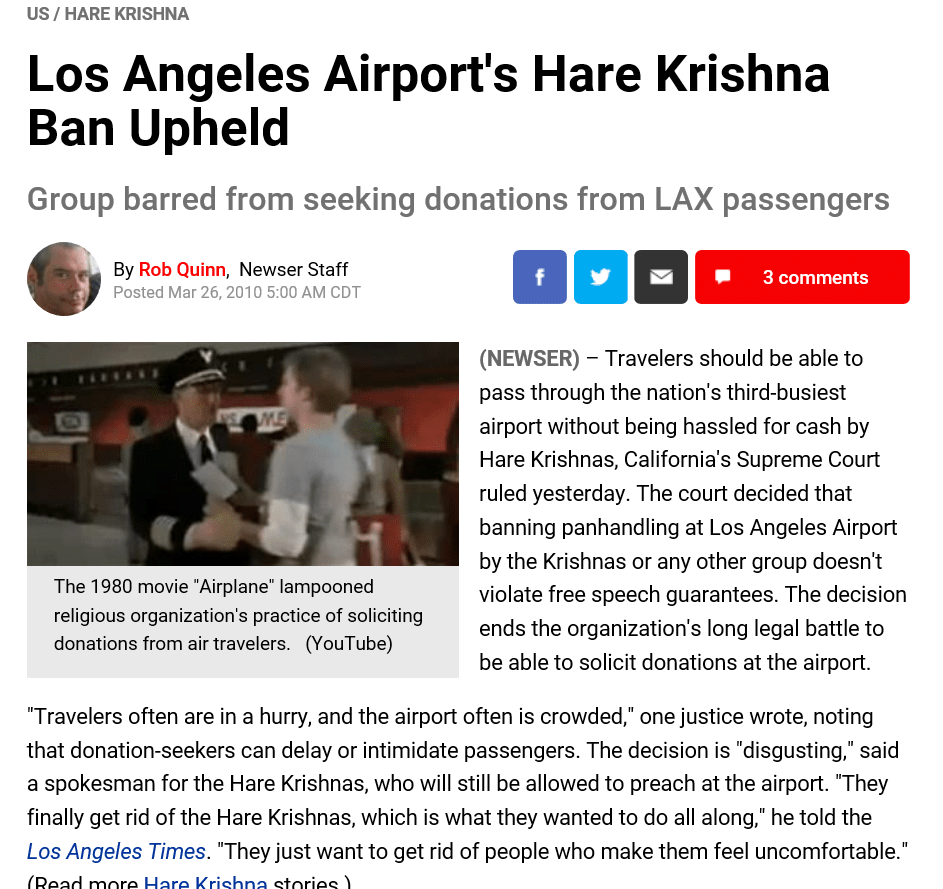
This is the final blog in a series of eight which have focused on the consumer and religion. Religion may enrich your life and consequently all experience. Consumers may not only want to purchase an item, they may need to be sure that the item is ethically sourced such as when buying mindfully. Other blogs have looked at boycotting a companies products because of a religious slur, intervening with religion to address alcohol addiction and the reciprocation rule and how a religion was banned from using the ‘benefactor before beggar’ strategy in an american airport.
Thanks for reading and Namaste! Bright Blessings! God Bless! to one and all.
References
Bahl, S., Milne, G., Ross, S., Mick, D., Grier, S., Chugani, S., Chan, S., Gould, S., Cho, Y., Dorsey, J., Schindler, R., Murdock, M. and Boesen-Mariani, S. (2016). Mindfulness: Its Transformative Potential for Consumer, Societal, and Environmental Well-Being. Journal of Public Policy & Marketing, 35(2), pp.198-210.
Bazzano, M. (2015). Before and after mindfulness. Self & Society, 43(1), pp.3-5.
Byng-Hall, j. (1995). Creating a Secure Family Base: Some Implications of Attachment Theory for Family Therapy. Family Process, 34(1), pp.45-58.
Ndubisi, N. (2014). Consumer Mindfulness and Marketing Implications. Psychology & Marketing, 31(4), pp.237-250.
Credits for images.
Figure 1 https://www.beliefnet.com/faiths/buddhism/4-influential-buddhists.aspx Accessed: 18/12/18
Figure 2 https://www.uhs.umich.edu/mindfulness Accessed: 18/12/18
Figure 3 https://www.quora.com/What-are-the-four-attachment-styles Accessed: 18/12/18
Figure 5 https://www.beliefnet.com/faiths/buddhism/4-influential-buddhists.aspx Accessed: 18/12/18



















![1133f1ff4828944d90f07b84d1b5cb55[2]](https://religiouslyconsuming.video.blog/wp-content/uploads/2018/10/1133f1ff4828944d90f07b84d1b5cb552.jpg?w=1100)
![bruegel0[1]](https://religiouslyconsuming.video.blog/wp-content/uploads/2018/10/bruegel01.jpg?w=1100)









 Religiously Consuming


