Featured

Reciprocation Rule and Religion

Devotee

Figure 1. Reciprocation Rule: Gift first.


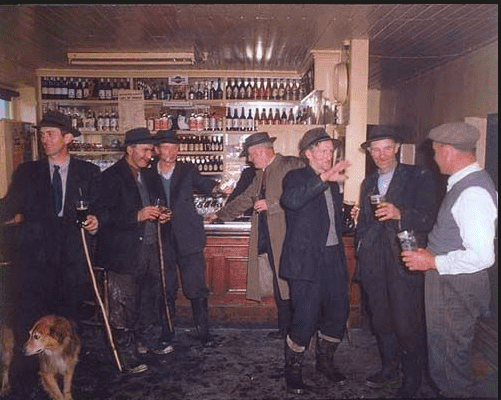
As a child sitting in the corner of the bar reading the Beano and drinking Fanta the world was played out. Dad was at the bar with the crew. Beers with creamy heads were thrown down greedy throats while the barmaid laughed and winked at her favourites. French Farm Workers hogged their corner, the strong smell of Gauloise cigarette tobacco permeating the building and at least 100 yards of the surrounding area.
wks

Figure 2. Tradition work-mans bar.   Trading centre.



tts

Figure 3. Barmaid with Favourite customers.


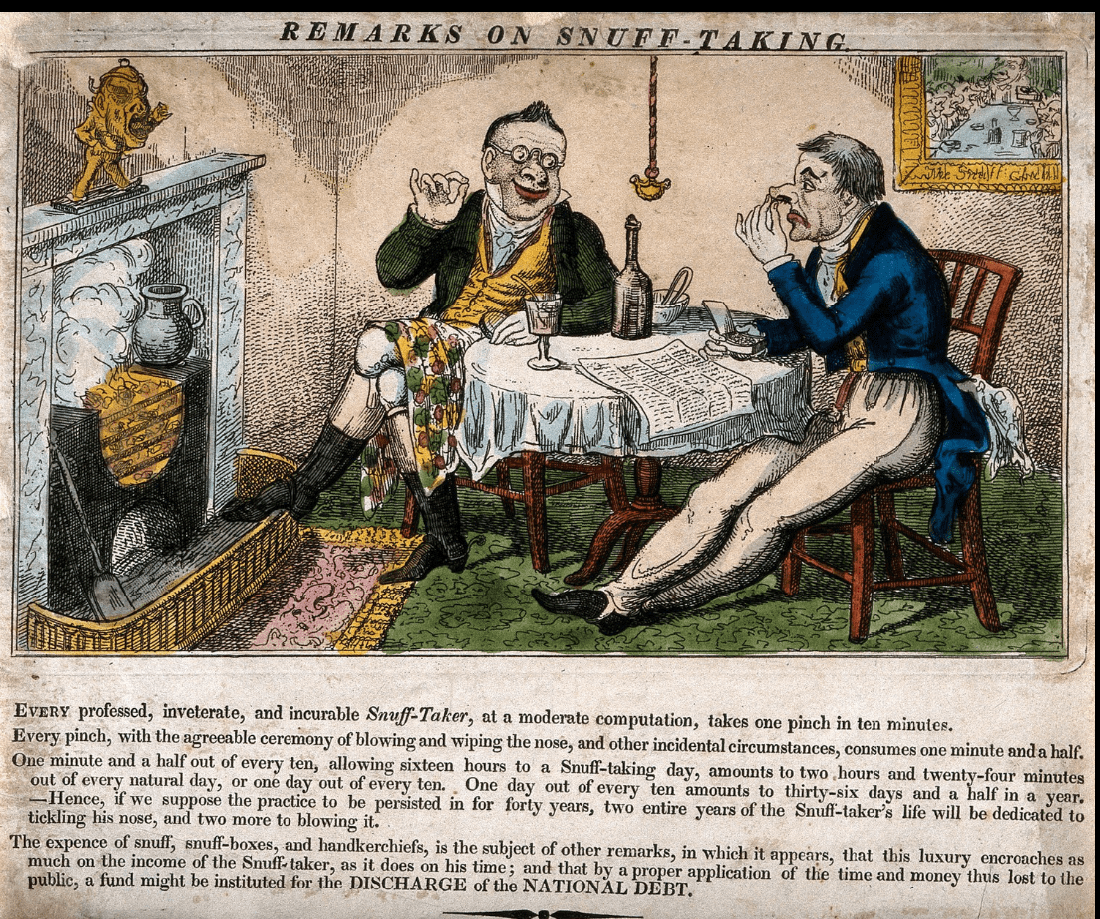
Enter John Davis a quiet, serious man, known to be extremely mean. The tone of the room seemed to be turned down, people seemed to be embarrassed, enjoying themselves frittering away their hard earned cash. John quietly ordered a half – pint and eyed the French Group. Walking over he removed a coin shaped case from his pocket, the French Workers smiled as he spoke conspiratorially to them, all while delivering a hefty dose of brown powder on the carefully crooked back of each hand, the workers eagerly held out. This brown power was sniffed with accompanying snorts, leaving each celebrant with a tell-tale brown smear on their unshaven upper lip.
NwSNF

Figure 4. Example of the habitual use of snuff


What was going on here? The meanest man in my world was offering copious quantities of some precious brown powder to the French Farm Workers. The Beano was forgotten, the Fanta had lost fizz! What on earth was going on?

The answer came fast and furious. As John joined his fellow drinkers with a smile, a Pint of ale was placed in front of him. John looked at his friends and exchanged pleasantries, downing the Pint in record time. Before he could finish another Pint was placed on the bar before him, paid for by the Farm Workers.

John drank eight pints that night (I counted each one), only paying for a half, minus the 1 penny worth of snuff.

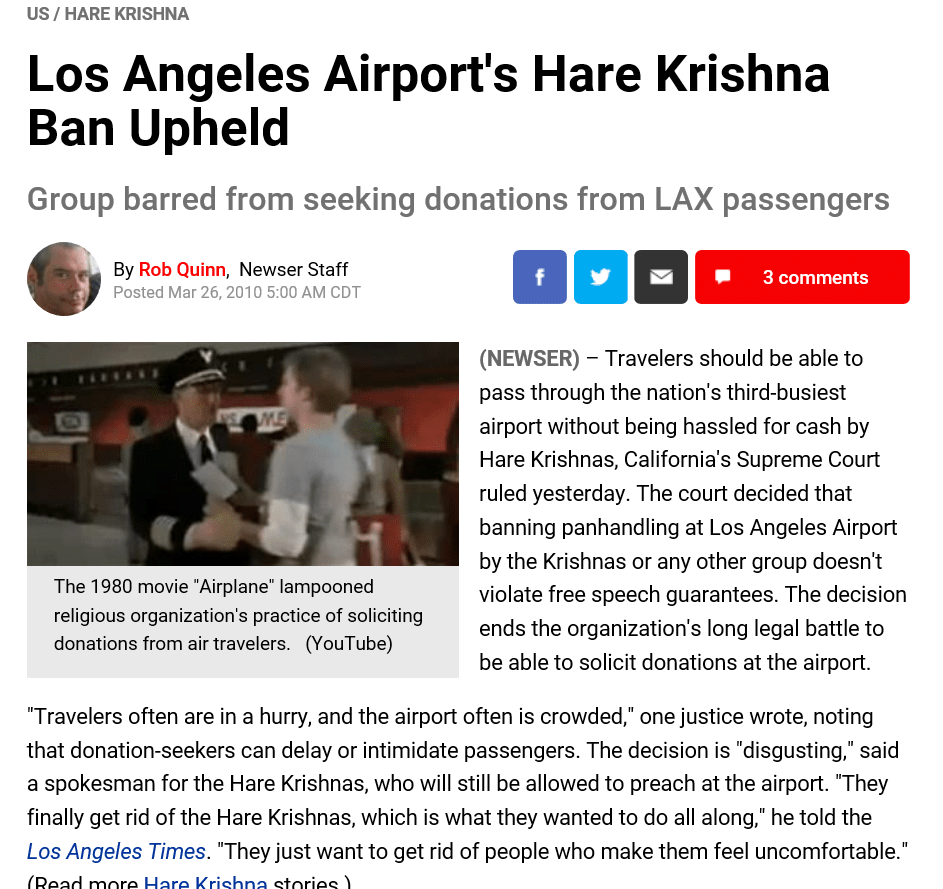
John had tapped into the reciprocation rule, used successfully by the Hara Krishna religion to raise funds. Reciprocation is arguably the strongest most pervasive of social forces. So strong is this force, that The Supreme Court of the United States of America, upheld an airports ban on begging. Exactly how this begging played out was using the reciprocation rule. The strength of this rule was tested as the target of the begging was often seen to be in conflict, yet still with ‘gritted teeth’ the sucker paid out.
APBan

Figure 5. Argument offered by Krishna devotee: “They just want to get rid of people who make them feel uncomfortable”. Is this assumption correct?


This is how the Krishna Devotees ‘worked a number’ on the general public. In a similar manner to John Davis mentioned above, the Devotees would approach a member of the public in a friendly manner and offer a gift such as a book, magazine or possibly more problematically a flower. Once the punter had the gift in their mitts, they were invited to contribute to the movement. At this very moment the punter is in conflict. She / He does not want to part with hard cash, and yet possibly through an evolutionary requirement, reciprocation kicks in and the punter feels duty bound to shell-out. One may argue that a person feels that they are behaving in a correct manner that is doing the right thing. This scenario is acceptable to a degree, though in the case of the flower which when discarded is retrieved by the Devotee to be re-sold seems to have been a step to far. Hence the airport ban!



Buddhism and Non-Attachment / Marketing and Mindfulness

Budhist Monk
Figure 1. Buddhist monk in meditation.

Buddhist teachings propose that all suffering derives from attachment which includes items, people, ideas and pleasure. Komagata (2010), studied Attachment Theory and how this theory sat with Buddhism. One finding: ‘Secure Attachment and Non – Attachment’ are compatible entities, in that both point in the same direction, there is no contradiction. Both positions of attachment are reputed to lead to well-being.

Mindfulness
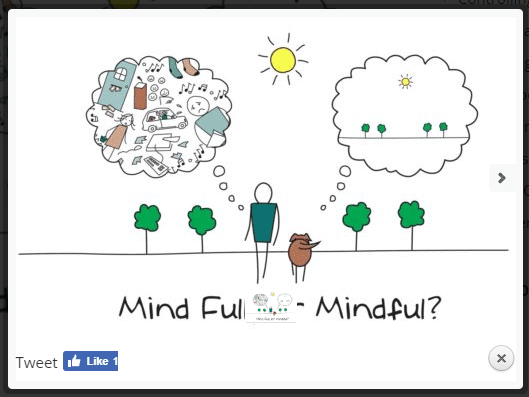
Figure 2. Mindful or Mindful?

In recognising the similarity between secure attachment and non-attachment, notions such as the middle way, impermanence and the not-self, appear relevant to both forms of attachment. Mindfulness and Buddhism promote a state of being in which one becomes a watcher. The ‘watcher within’ allows desires to come and go, and avoids clinging to any one desire. By allowing desires to pass, craving is gradually eroded. Craving is regarded as the road to misery.

There would appear to be a contradiction in the motion that both Mindfulness and Buddhism promote non – attachment, most notably with mindfulness and the consumer. However, the view that one eschews all chattels and ‘takes to the robe’ to achieve non-attachment is an extreme example. Rather, the intrinsic value of your chattels may undergo a change, for example, looking after your possessions as though a caretaker for those who will own them next. There may be a realisation that ownership is an illusion. An improvement on clinging attachment, secure attachment develops which may envelop all areas of life.

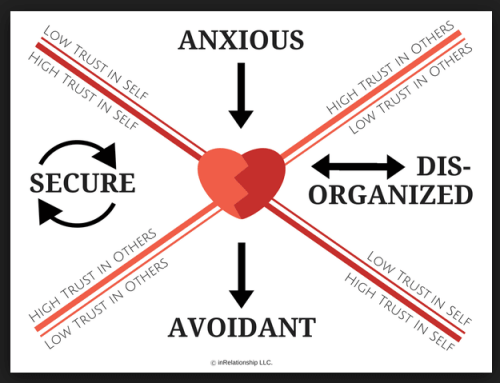
secure attachment
Figure 3. How secure attachment develops by building trust, which may evolve under mindfulness practise.

Ndubisi (2014) conducted research into how consumer mindfulness applied to market forces. The three areas which consumers who practised mindfulness demonstrated a difference were greater empathy, better interpersonal skills and high reciprocity. Mindful consumers may also have a greater awareness of environmental concerns, company policies regarding care of employees and the quality of the service / product supplied. Building relationships based on recognisable ethical positions my take time and be expensive. However, once established, a strong loyal customer base (a prerequisite of success) is possible. Also, mindful consumers are viewed as open to novel ideas, are creative, and seek to make novel contributions. Here we have a loyal customer who will understand that a business has to adapt to changing business environments and may be a ‘forgiving consumer’.

HuzPail
Figure 4. Mindfulness given the establishment ‘seal of approval’.

As mindfulness gains a stronger hold on the population with a landmark day the 20th October 2015. Surely you will agree? That 20th October was an unusual day in the British Houses of Parliament with politicians from all parties gathering to meditate, mindfulness style. The movement of mindfulness is growing in momentum and this requires investigation by the retail industry. Customers may make purchases based on a new set of criteria and retailers need to be aware of how a consumer considers buying based on the philosophy of mindfulness.

Budhist Monk
Figure 5. Stilling the mind with meditation, Namaste! 

This is the final blog in a series of eight which have focused on the consumer and religion. Religion may enrich your life and consequently all experience. Consumers may not only want to purchase an item, they may need to be sure that the item is ethically sourced such as when buying mindfully. Other blogs have looked at boycotting a companies products because of a religious slur, intervening with religion to address alcohol addiction and the reciprocation rule and how a religion was banned from using the ‘benefactor before beggar’ strategy in an american airport.

Thanks for reading and Namaste! Bright Blessings! God Bless! to one and all.

References

Bahl, S., Milne, G., Ross, S., Mick, D., Grier, S., Chugani, S., Chan, S., Gould, S., Cho, Y., Dorsey, J., Schindler, R., Murdock, M. and Boesen-Mariani, S. (2016). Mindfulness: Its Transformative Potential for Consumer, Societal, and Environmental Well-Being. Journal of Public Policy & Marketing, 35(2), pp.198-210.

Bazzano, M. (2015). Before and after mindfulness. Self & Society, 43(1), pp.3-5.

Byng-Hall, j. (1995). Creating a Secure Family Base: Some Implications of Attachment Theory for Family Therapy. Family Process, 34(1), pp.45-58.

Ndubisi, N. (2014). Consumer Mindfulness and Marketing Implications. Psychology & Marketing, 31(4), pp.237-250.

Credits for images.

Figure 1 https://www.beliefnet.com/faiths/buddhism/4-influential-buddhists.aspx Accessed: 18/12/18

Figure 2 https://www.uhs.umich.edu/mindfulness   Accessed: 18/12/18

Figure 3 https://www.quora.com/What-are-the-four-attachment-styles   Accessed: 18/12/18

Figure 4 http://oxfordmindfulness.org/news/launching-mindful-nation-uk-report-houses-parliament/  Accessed: 18/12/18

Figure 5 https://www.beliefnet.com/faiths/buddhism/4-influential-buddhists.aspx  Accessed: 18/12/18

Religious Boycotting.

Boycott

One of the most powerful effects, which a retail business will wish to avoid is the Boycott. The Boycott, which is named after Captain Charles Boycott who was socially ostracised in a calculated series of tactical moves by the Irish Land League. Boycott, found that his workers, local businessmen and even the local postman refused to deliver his mail, even though in some cases there was considerable hard-ship to the ‘protesters’, the offensive achieved the goal of isolating Captain Charles Boycott.

Delmonte

Modern day boycotts are instigated when the consumer refuses to purchase a product due to perceived injustice such as Unethical transportation by Delmonte. In 2008 Delmonte transported a toxic chemical, endosulfan, which was used as a pesticide, inside a passenger vessel.

How on earth did a company choose to break the law and place the lives of 700 people in further danger? Kaliasan-PNE (People’s Network for the Environment) called for a blanket boycott of all Delmonte products.
Would you opt to replace all Delmonte products with a similar type? to support disapproval of the actions of a company which not only defies legal responsibilities, this company which transported a dangerous pesticide which contaminated marine biology? This then is the Boycott.

ArlaF

When marketing to differing cultures with religious affiliations which contrast wildly form one’s own religious practise, careful observation and understanding is a requirement. Abosag & Farah(2014), conducted research concerning religiously motivated boycott and brand image, loyalty and product judgement.
One example: boycott of Arla foods. This Danish company supported freedom of expression, considering  that the Muslim community overreacted to the cartoons depicting the Prophet Mohammed in [what Muslim’s regarded] as ‘an acceptable manner’. Arla foods approached this situation in a measured constructive manner.

First, Arla foods made the Muslim community aware that they were a Danish / Swedish company. This intended to dilute the effect of being just a Danish company. Next, in a reminder of many years of a good working relationship, Arla reinforced with: “we have been in profitable relations for 40 years. Finally, Arla justified their position by explaining that the unfortunate incident was not due to Arla’s actions, no, it was due to inaction of others.

HS

The one-way statement out-lined above was versed so as to offer apologies, show that Arla are also a Swedish based company, reinforce memories of a strong relationship and to understand the position of the boycotting Muslin Community. Also a reason for the problem arising was not because of anything that the company had done, it was because of other agents.

For preventing and managing boycotts there are a few key areas of focus. First, remain within national and international law. In the case of Delmonte, above using a passenger ship to transport a dangerous pesticide, is a procedure that most people would condemn. Next, when religious practise of a country differs from one’s own, get informed and stay informed. Most religions share common ground, genuine courtesy with curiosity toward a practise being most often welcome. Finally, as in the case of Arla Foods, remain blameless while suggesting that other agents were likely to be the problem.

References

Abosag, I., & F. Farah, M. (2014). The influence of religiously motivated consumer boycotts on brand image, loyalty and product judgment. European Journal Of Marketing, 48(11/12), 2262-2283. doi: 10.1108/ejm-12-2013-0737
Teoh, S., Welch, I., & Wazzan, C. (1996). The Effect Of Socially Activist Investment Policies On The Financial Markets: Evidence From The South African Boycott. SSRN Electronic Journal. doi: 10.2139/ssrn.10203

Credits for images.

https://www.worldbulletin.net/archive/muslims-boycott-danish-products-h312.html Accessed 01/12/18

https://teamster.org/blog/tags/del-monte Accessed 01/12/18

http://armansofie.blogspot.com/2015/03/analysis-of-arla-boycotting-in-middle.html Accessed 01/12/18

https://www.freeimages.com/premium/arabic-muslim-businessman-person-shaking-hands-on-meeting-843516 Accessed 01/12/18


‘Do What Thou Wilt’ and the religion of a counter culture.

666

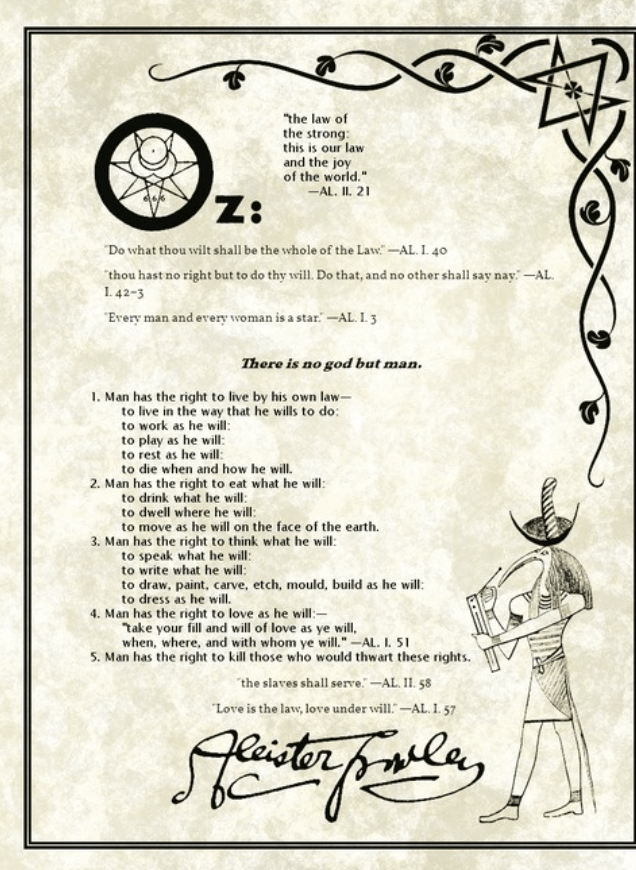
Figure 1. Condensed teachings of AC


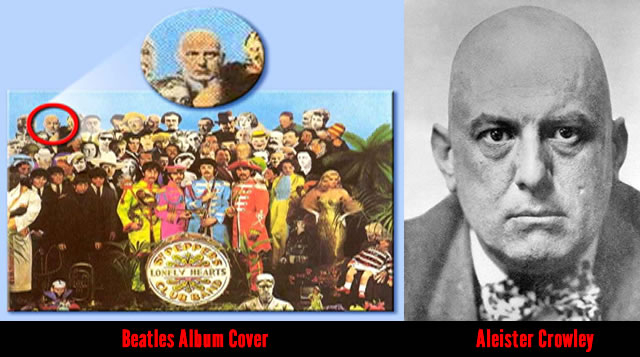
Aleister Crowley established a religion based on the teachings of a disincarnate being: Aiwass. On three consecutive days April 8, 9, and 10, 1904, while honeymooning in Cairo, Crowley ‘channelled’ The Book of The Law. Read to-day in the light of intervening world wars and incredible technological changes, the Book of the Law is strikingly accurate. Further, observable compliance among many societal groups which appeared to discourage free thought and deviation from the norm, was something Crowley was passionate about changing.

CrowHexegram

Figure 2.


Symbol designed by AC used as a meditation device by acolyte’s.


Crowley may be regarded as using self-promotion and psychology to draw a select group and type of follower to his new religion. Many Thelemites, from Thelema meaning will, appeared to have mental health problems and often a drug habit. The Abbey of Themela in Tunisia often had bowls of cocaine and heroin with bottles of quality wine while the food was normally extremely basic and the surroundings understandably grubby.
This seemingly chaotic life-style also taught Magickal practice, with a severe regime. One example, the cutting of the arm with a razor each time one expressed self by saying: I. The purpose of this was to attempt to dissolve the ego, while promoting unity or Gaia hypothesis. Gaia hypothesis promotes the interconnectedness of all beings and refutes separation. Therefor, focus on self, is considered to increase separation.

Cuts

Figure 3.


Results of focus on self. Crowley style.


Sixties counter-culture embraced Crowley as their spiritual leader. A religion which seemingly promoted drug use and sexual expression of many natures, what was not to like?

beatles_crowley

Figure 4. The Beatles endorse Crowley as the Prophet of the New Aeon


However, Crowley’s teachings and the religion of Thelema in fact, did not expressly sanction or promote drug use or unrestricted sexual behaviour. ‘Do What Thou Wilt’, is a clarion call to discover one’s own inner self and act accordingly.

Desmond, McDonagh and O’Donohoe (2000), report on the counter-culture as being a search for knowledge of subconscious. Also, remarking that counter-culture of the 1960’s was more about transcendence, which has morphed into resistance. Thelma teaches of transcendence and resistance, providing tools with which to pry open areas of subconscious igniting a state of greater awareness. Crowley also promoted resistance against governments and rules and regulations which restrict and control. The trust of Thelema’s argument being that transformation in the external world begins with change in the internal world.
The message on how to understand niche markets and the influence a counter culture movement may have, is to understand both the exoteric and esoteric ethos of that movement. The exoteric in the counter-culture / religion model, which occurred in the 1960’s, appeared to be rebellion against previously held values and the installing of progressive values. However, to gain a full understanding of the contributory factors, knowledge of the inner beliefs (the esoteric), such as a matching religious philosophy, offer’s a more complete picture.
To achieve maximum coverage and uptake advertisements require inclusivity. Exclusivity, marginalises groups and shrinks a potential client base. Also, by being mindful of outliers, such as counter-culture groups, marketing will be in place to address the audience when the group becomes mainstream. Heath and Potter (2006), support the claim that counter-culture groups increase consumer culture by creating a new set of goods for rebel consumers.

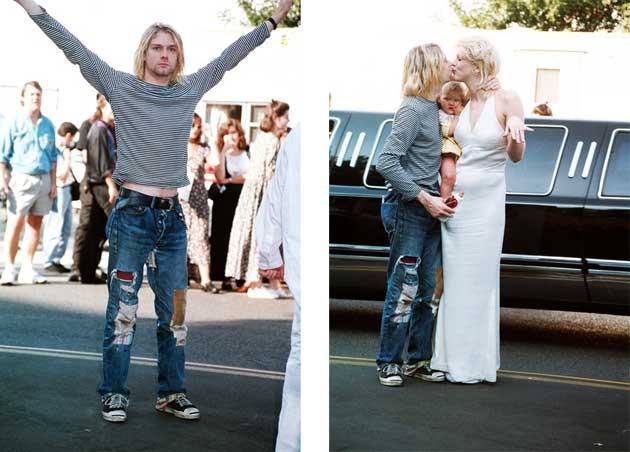
90s-fashion-trends-grunge11

Figure 5.


Grunge goes mainstream.


Carolyn Okomo writing for Chron, gives the example of Calvin Kline and the advert for CK One. Here, one witnesses the interaction between high fashion and the grunge subculture. The advert displays rather gaunt, laid back dudes which drew heavily on the Seattle based grunge culture. Grunge became a world-wide phenomena, quickly becoming a target market for many retailers.
The next predicted market target is the demographic known as the Millennials. Knowledge of how rebellion is ‘played out’ and areas of rebellion given a nod of respect by this group require study and appreciation to tailor adverts correctly.

References

R Desmond, J., Mc Donagh, P., & O’ Donohoe, S. (2000). Counter‐culture and consumer society. Consumption Markets & Culture, 4(3), 241-279. doi: 10.1080/10253866.2000.9670358eferences

Heath, J. and Potter, A. (2006), The Rebel Sell: How the Counter Culture Became Consumer Culture, Chichester: Capstone.

Credits for images.

Accessed 16/11/2018 Image 1 https://i.pinimg.com/736x/42/07/63/4207633a191679c64bc821825e44470c.jpg

Accessed 16/11/2018 Image 2 https://i.pinimg.com/564x/5d/fc/8f/5dfc8f9facc8b274d130827361dae444.jpg (image 2)

Accessed 16/11/2018 Image 3

https://i.pinimg.com/736x/bf/4e/35/bf4e35e992be55e84131fb07a6607d47–depression-kills-depression-suicide.

Accessed 16/11/2018 Image 4

http://revelationnow.net/2013/08/22/they-sold-their-souls-george-harrison/

Accessed 16/11/2018 Image 5

https://www.kerrang.com/the-news/courtney-love-and-frances-bean-cobain-fight-to-keep-kurt-cobain-death-photos-from-being-released/


Samhain: re-branding religious practice

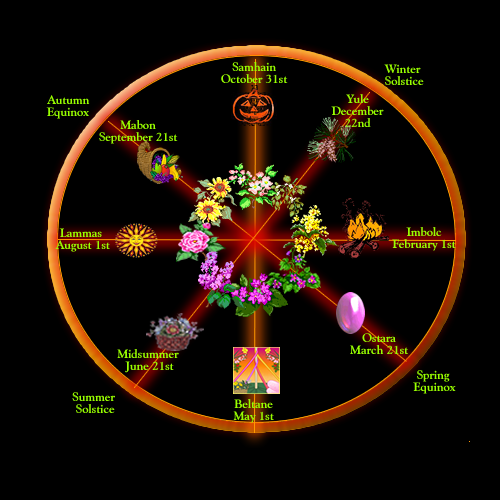
Pagan Wheel
Figure 1 Eight major celebrations practised by witches

All hallows, All-saints day, now widely known as Halloween generated an estimated $ 9.1 Billion in 2017, growing from $8.4 Billion in 2016. Witches celebrate the end of the year and beginning of the new-year at Samhain. The departed are invited to attend the ceremony which is often held at the closest wane moon to Oct 31. The Old Religion places great store on information received by those who have passed through the veil of death. Sometimes great comfort is provided by this interaction between living and those living beyond death. So, is this a solemn occasion? Well, in part, however, while the giving the living a chance to experience that which lies beyond, there is also the opportunity for the departed to experience life. Life may then take on a sacred experience with a deeper appreciation for all facets of living. Death here, also alludes to ending of relationships, the severing of bonds and perhaps the ‘burning of ships’. Dobelii, (2013) gives an example of burning ships, to ensure progress, rather than keeping many options open and defusing energy.

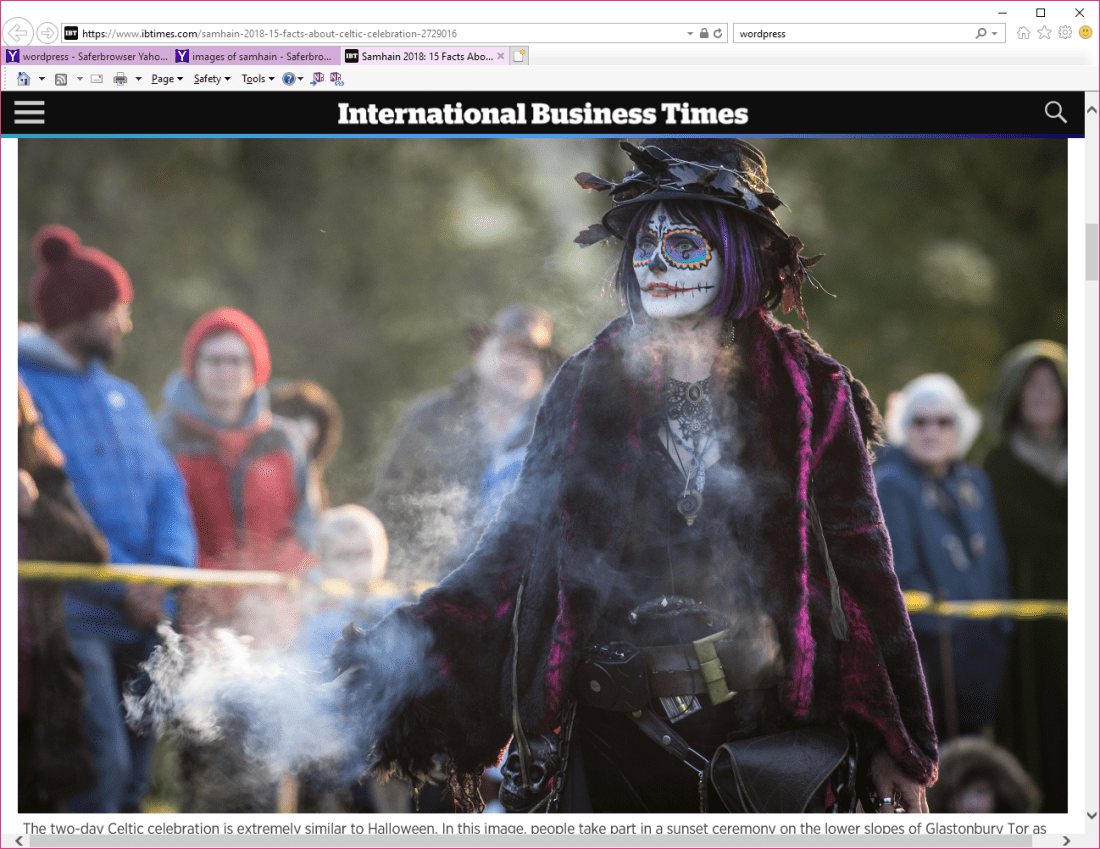
Witch_Glastonbury
Figure 2 Witch smudging an area with ‘sage bundle’ prior to the sacred ritual

Samhain has been re-branded, in 835 Pope Gregory IV focused on re-branding Samhain as ‘All Hallows’, rather than ban the pagan celebration, Samhain became absorbed by the established Christian religion, Giraudon, D. (2005).

NPGIV
Figure 3 Pope Gregory IV re-branded the Pagan celebration of Samhain

By the 15th century, All Hallows took a darker turn, with witches being blamed for mocking the saints leading to increasing victimisation and prejudice. Late 17th century witnessed the appalling Salem witch trials,  which are still in-bedded in folk-lore and legend. From the 18th century All Hallows began to be celebrated with pranks taking on the familiar ‘Trick or Treat’ theme practised to-day.

Hall
Figure 4 Celebrating Halloween 21st Century.

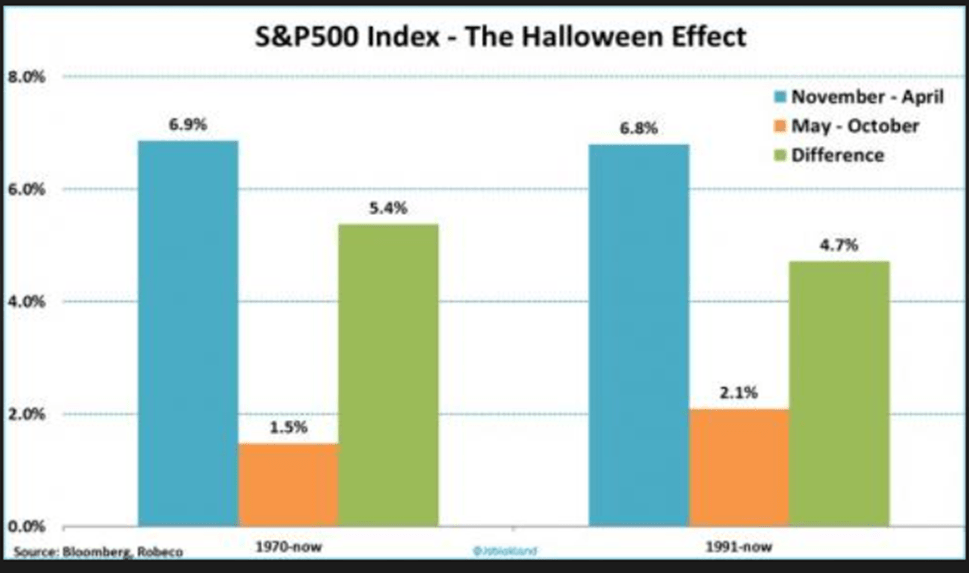
Samhain, reinvented as Halloween, has been paired with business parlance: The Halloween Effect. This effect is the generally recognized condition of the stock market from November to April which is significantly stronger than the remaining months.

nes
Figure 5 Example of fluctuations in stock market strength

Re-branding Universities    is an example of taking a system and modifying components to suit the marketization process. One may compare the depth and true inner comprehension of the original Samhain ritual with the ‘luke-warm’, though relatively expensive experience of the consumerized version. Universities are being rebranded by cooperate advertising. By re-branding the academic experience is transformed, although productivity may increase, vocational aspects which provided depth may be lost.

NR
Figure 6 Placing emphasis on outcome

References

Figure 1 accessed 31/10/18: (see below)

https://religiouslyconsuming.video.blog/wp-content/uploads/2018/11/6f19d-wheel.png

Figure 2 accessed 31/10/18: https://www.ibtimes.com/samhain-2014-3-things-you-need-know-about-pagan-festival-1715741

Figure 3 accessed 31/10/18: https://en.wikipedia.org/wiki/Pope_Gregory_IV

Figure 4 accessed 31/10/18: http://festival-collection.com/wp-content/uploads/03/Halloween-Party-Photos-(03).jpg

Figure 5 accessed 31/10/18: https://www.leadingtrader.com/10/the-halloween-effect-and-the-stock-market-the-best-time-to-buy-and-sell-stocks/

Figure 6 accessed 02/11/18: https://creativa.com.au/wp-content/uploads/2015/06/image-1.


Intervening with Religion

Intervening
Figure 1. Alcoholics Anonymous meeting

Research suggests that religiosity provides a protective factor against problematic alcohol use (Bazargan et al. 2004;  Michalak et al. 2004; Patock-Peckham et al. 1998).

Carl Jung, in a letter to Bill W (Alcoholics Anonymous (AA) co-founder) suggested two ways of leading an individual with alcohol addiction to recovery. The first, real religious insight, and second a protective wall of human community (Kelly et al. 2011),  both of which may be presented as an intervention.

AA functions as an intervention, with many adherents finding that alcohol made them ‘spiritually sick’ (Miller, 2007), the 12 – step program enabling the building of spiritual health and also the protective factor of a sober human community with which to relate to.

Step 3, of the 12 – step programme: ‘made a decision to turn our will and lives over to God as we understand him’. Step 5, ‘admitted to God, ourselves and another human being the nature of our wrong doings’, Step 7, ‘Humbly, asked God to remove our short comings’. 12th Step, Step 12, ‘Having had a spiritual awakening as the result of these steps, we tried to carry this message to alcoholics and to practice these principles in all our affairs’.

Although the 12 step programme encourages sobriety by abstinence, members may attend meetings even though inebriated, as relapse is recognised as a part of recovery in some instances. Member are of course encouraged to remain alcohol free, the ‘coin economy’ is offered, this allows relatives and friends to purchase an attractive and inspiring ‘sobriety coin’. This coin, as well as being an attractive memento, serves as a reward and the inscription is inspirational. Key in providing a visible representation, a marker of time (coins are often given monthly) and a reminder of belonging to a protective wall of human community.

sobriety-coin-e1540549944830.png
Figure 2. Sobriety Coin

The sobriety coin, as well as offering the above, also connects the member with the AA brand, via the triangle symbol depicted. Often carried as a talisman, a repeated imprinting by continual viewing, the coin affirms membership and stage in the AA program. Wiseman, (2004), conducted research into why carrying a charm mattered, findings suggest that an increase in confidence may be achieved. Individuals requiring control over their environment, when anxious and uncertain about the future are viewed as receiving a greater benefit by carry a charm.

Sobriety Coin
Figure 3. Talisman / Charm carried by AA members


Liebson et al. (1971), researching the token economy and effects on alcohol dependent participants, found that when using the token economy, alcohol consumption came under operant control. In this instance, the participants were all hospitalized because of their condition regarding alcohol. In an institution, the token economy functions very much like money in the greater society outside. Behavior may be shaped, the token acting as a generalized reinforcer, which may be exchanged for many reinforcers. So, in this instance, participants demonstrated an improved control over their alcohol consumption.

In conclusion, religion may offer a protective factor against problematic alcohol consumption. Considering that there is a god (or higher power) appears to aid alcoholics in recovery. The use of sobriety coins, connects the AA member with the in-house community, reinforces continued sobriety and the coin also acts as a talisman, providing confidence.

Word Count: 538

Illustrations Reference list

 Figure 1. accessed 26/10/2018: http://www.promisesaustin.com/wp-content/uploads/2015/06/Diverse-group-of-people-in-a-meeting-together-000038471718_Medium.jpg

Figure 2.  Figure 2. https://www.woodenurecover.com/assets/images/bronze-aa-month-chips/seven-month-aa-chips.jpg

 Figure 3. accessed 26/10/2018: https://www.woodenurecover.com/assets/images/bronze-aa-month-chips/seven-month-aa-chips.jpg


Gaining and Religion

sciencelastsupper-1

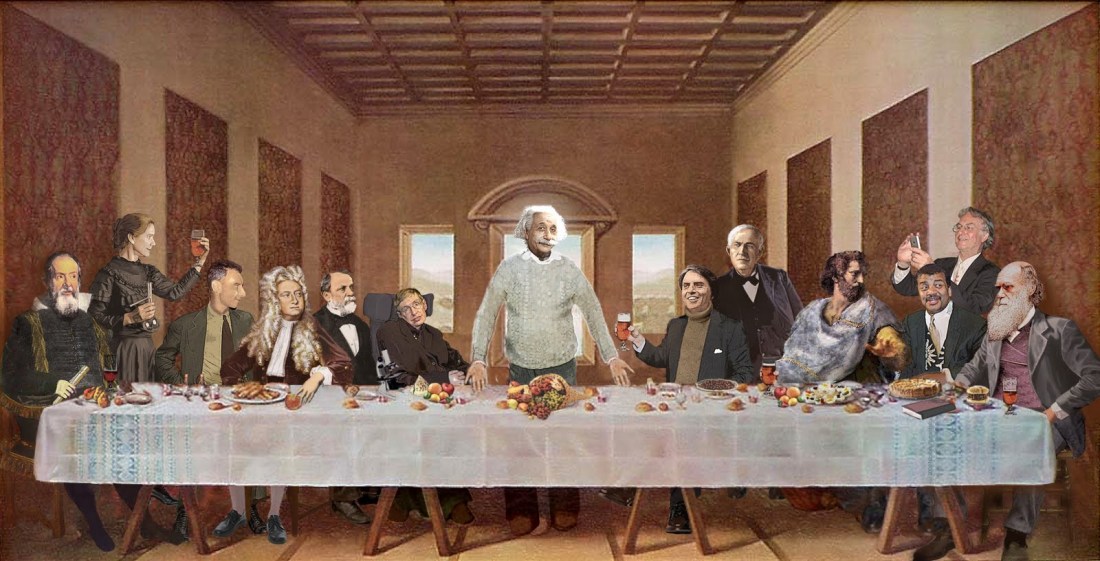
Figure 1. Parody of The Last Supper.

To-days lecture offered reflection on the possible problematic offering of poor food choices combined with aggressive marketing. The class appeared to agree that food may be regarded as addictive to some people. Volkow, Wang, Fowler & Telang, (2008), conducted research into the effects of food and recreational drugs. The suggestion is, that both food and drugs evoke a reinforcing effect by increasing the dopamine in the limbic system. Food and drugs activate the brain reward circuitry. One thought was: ‘well, many religions use fasting, and forms of self-control regarding food (such as lent in the Christian calendar and Ramadan practised by Muslim’s)’.

1133f1ff4828944d90f07b84d1b5cb55[2]

Figure 2. No mention of gluttony specifically.

Therefore Religion may be considered to offer a protective factor guarding against overindulgence?

bruegel0[1]

Figure 3. Bruegel’s ‘The Peasants Wedding’ (1567-1568) oil on wood. Occasions such as this may normalise excessive food consumption.

As counter-intuitive as it may seem, research suggests that being religious may lead to obesity. Cline, & Ferraro (2006), report that there is a higher rate of obesity among religious adherents and also found some differences between men and women. The differences: women who used religious media either were obese or became obese while men who turned to religion for consolation were not obese. One interpretation of these findings is that men may turn to religion for consolation instead of food. Yeary, Sobal, & Wethington, (2017), conducting a review of the literature after locating and coding 85 studies, found that found that religiosity was linked with higher body weight. One suggestion for the above findings is that religious gatherings may promote greater food consumption. Being with fellow Devotee’s, and feasting within a religious context may have an effect of normalizing overeating.

Man-Eating-Campbells-Soup-Painting-75821.jpg

Figure 4. Wansink (2010) experimented with an auto-fill soup bowl, participants ate 73% more soup. As the soup bowl remained half full, participants remarked that they could not be full.

Wansink, (2010) elaborating on his 2004 seminal research ‘Bottomless bowls: Why visual cues of portion size influence intake’, (auto-fill soup bowls = 73% more consumption) has found specific measures to reduce food intake. One simple, yet impress device is the reduction of plate size. If a plate measures 12.5 inches a person will eat 27% more, than if served food on a 9.5 inch plate.

plate-plastic-clear-9-inch-50-count

Figure 5. 9.5 inch plate.

Applying the notion that food consumption will be reduced on plate size, offers a great opportunity for the catering industry to implement changes in their food presentation. Why would an industry marketing food wish to reduce food consumption?

12-inch-Porshelina-Dish

Figure 6. 12.5 inch plate. Customers will eat 27% more than the 9.5 inch plate in Figure 4.

As customers are increasingly aware of their rights and the catering industry aware of litigation, being a responsible purveyor of vitals is a priority. Taking steps to ensure a consumers health and comfort are not only important, they are vital for business to thrive. Freedman, & Brochado, (2009), found that reducing portion size in an ‘all-you-can-eat’ environment is not noticed by most customers and represents a lowering of calorific intake.

Word Count: 426

References

Cline, K., & Ferraro, K. (2006). Does Religion Increase the Prevalence and Incidence of Obesity in Adulthood?. Journal For The Scientific Study Of Religion, 45(2), 269-281. doi: 10.1111/j.1468-5906.2006.00305.x

Ferraro, K. (1998). Firm Believers? Religion, Body Weight, and Well-Being. Review of Religious Research, 39(3), p.224.

Freedman, M. and Brochado, C. (2009). Reducing Portion Size Reduces Food Intake and Plate Waste. Obesity, 18(9), pp.1864-1866.

Volkow, N., Wang, G., Fowler, J. and Telang, F. (2008). Overlapping neuronal circuits in addiction and obesity: evidence of systems pathology. Philosophical Transactions of the Royal Society B: Biological Sciences, 363(1507), pp.3191-3200.

Wansink, B. (2010). From mindless eating to mindlessly eating better. Physiology & Behavior, 100(5), pp.454-463.

Yeary, K., Sobal, J. and Wethington, E. (2017). Religion and body weight: a review of quantitative studies. Obesity Reviews, 18(10), pp.1210-1222.

Figure 1 accessed 18/10/18 https://religiouslyconsuming.video.blog/wp-content/uploads/2018/10/7a856-sciencelastsupper.jpg

Figure 2 accessed 18/10/18https://rjchristiancoaching.com/wp-content/uploads/2015/03/08.-Prayer-fasting.-Facebook.jpg

Figure 3 accessed 18/10/18 http://www.highrise.dircon.co.uk/deptlads/brussels/bruegel0.jpg

Figure 4  accessed 18/10/18 http://www.freakingnews.com/pictures/75500/Man-Eating-Campbells-Soup-Painting–75821.jpg

Figure 5 accessed 18/10/18 https://static.petersofkensington.com.au/images/ProductImages/479051-Zoom.jpg

Figure 6  Accessed 18/10/18 https://www.serenaandlily.com/on/demandware.static/-/Sites-masterCatalog_SerenaandLily/default/dw5cbafe77/hi-res/Fairfax_Plate_Large_Blue_OH_MV_Crop_SH.jpg 


Losing your religion

474666679_0ec3754b56

Figure 1 Religious Belief may lower when viewed through the prism of System 2

When deciding, one either processes the decision using System 1, the ‘Gut feeling’ or System 2, an analytical method. Kahneman (2011), suggests that when System 2 is kept busy System 1 has more influence on behaviour. Part of a  psychological experiment which involved a participant remembering a long list of digits and being offered chocolate cake or a fruit salad, returned a significant number of participants who choose chocolate cake. From this ‘chocolate cake’ result we can suggest that as System 2 was busy, System 1 selects the easy rather than healthy choice.

Wm

Figure 2. System 1 activation

System 1 and System 2 have been studied with regard to the cognitive underpinning which ensures a continued faith. Gervais and Norenzayan (2012), conducted an interesting experiment, participants completed a survey measuring religious beliefs. By presenting the survey in (a) clear font (b) difficult to read font, the difficult to read font survey returned, showed lower religious belief. This suggests that being more analytical (in having to read closely) leads to switching to System 2. Here System 2 appears to process the presented information in a cognitively different manner, leading to a lowering of religious belief.

vw

Figure 3. System 2 activation

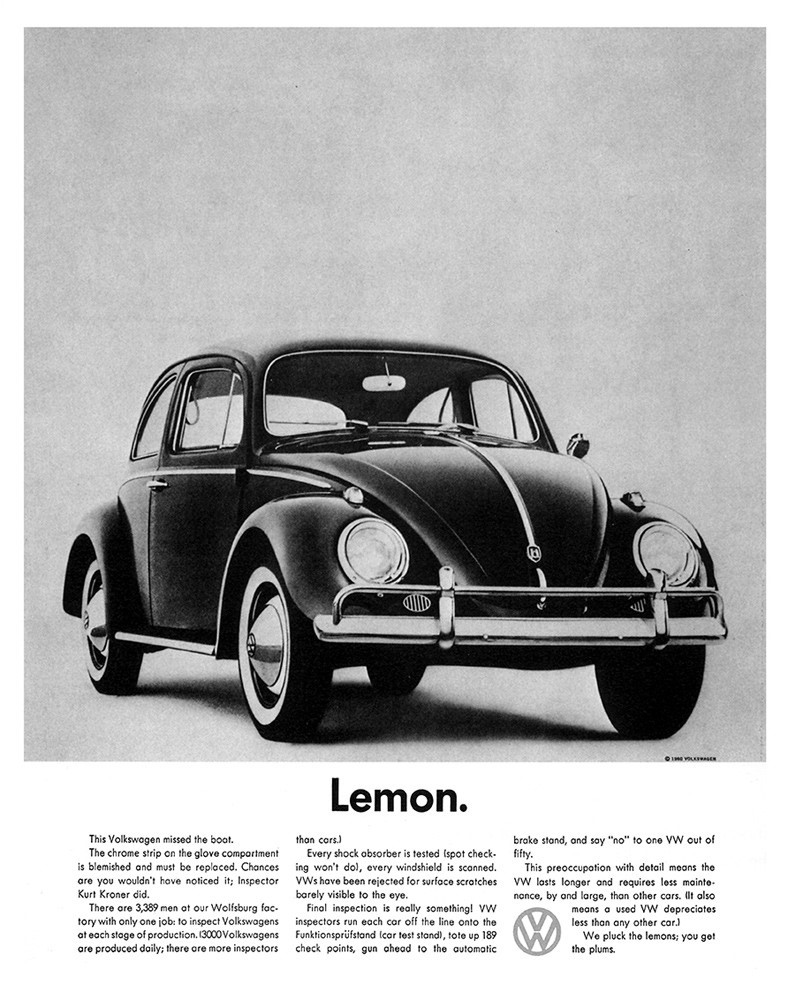
Advertisements utilize both systems. This VW car is advertised as being a Lemon, this generates a question: Why on earth would a car manufacturer call their product a ‘Lemon’? Further reading informs of dedicated quality control and explains the stringent methods utilised by the company. A bill board on a motor-way has to deliver a quick sharp message as the information has to be processed quickly, typically using System 1.

When adverts generate a positive effect, such as viewing a cute puppy or a piece of jewellery worn by a celebrity System 1 is responding. Adverts which generate an analytical approach such as the VW advert above appeal to System 2.

golden-puppy-life-national-geographic-ftr-1.jpg

 Figure 4. This pup signals positivity and immediate gratification: System 1

gratnerREX0211_468x333

Figure 5. Gerald Ratner after devaluing his products. By addressing System 2 which prevented impulse buys System 1.

One lesson which may be learnt by understanding the System 1 and System 2, concept, is how one is able to affect behaviour in your customer base in a dramatic fashion. Have you heard the phrase: “Doing a Ratner” ? A successful businessman with a chain of ‘low-end’ jewellery shops may have been activating System 2 when he remarked ‘on record’ that his product was ‘total c**p’, further and more salient, mocking his line of cut-glass sherry decanter with six glasses and a silver-plated tray your butler can serve you drinks on all for £4.95. Then to add further information for System 2 to compute, remarked that though the earrings were cheaper than a prawn sandwich they probably would not last as long. It seems reasonable to suggest that had Mr Ratner promoted his Jewellery addressing System 1 remarking: “Our latest line is an all time bargain suitable for all age groups” or “We can produce jewellery cheaply because of our high output” the company would have profited. Sadly the Ratner group lost an estimated £500 million, possibly because of a lack of understanding of these two behaviour modification systems retrieved from: https://en.wikipedia.org/wiki/Gerald_Ratner. 

A problem with the customer being enlightened by encouraging an analysis of the product in this instance, was that the situation was irreversible. Rather than buy a tacky piece of Jewellery at lunch time, why not have a prawn sandwich which offers greater value? The customer was drawn away from impulse buying to reflective thinking and may have considered themselves above the level of purchasing goods not fit for purpose.

References

Gervais, W., & Norenzayan, A. (2012). Analytic Thinking Promotes Religious Disbelief. Science, 336(6080), 493-496. doi: 10.1126/science.1215647

Grewal, D. (2012). How Critical Thinkers Lose Their Faith in God. Scientific American, 307(1), 26-26. doi: 10.1038/scientificamerican0712-26

Kahneman, D., & Egan, P. (2011). Thinking, fast and slow. New York: Random House Audio.

Muramoto, O. (2004). The role of the medial prefrontal cortex in human religious activity. Medical Hypotheses, 62(4), pp.479-485.

Shenhav, A., Rand, D. and Greene, J. (2012). Divine intuition: Cognitive style influences belief in God. Journal of Experimental Psychology: General, 141(3), pp.423-428.

https://www.communicus.com/system-1-advertising-impact/

Figure 5 https://img.dailymail.co.uk/i/pix/2007/11_01/gratnerREX0211_468x333.jpg

Figure 4 https://static.parade.com/wp-content/uploads/2018/03/golden-puppy-life-national-geographic-ftr-1

Figure 3 http://toderash.net/wp3/wp-content/uploads/2011/10/lemon-vw

Figure 2 http://adsarchive.com/wp-content/uploads/2014/11/mouthtunnelst.jpg

Figure 1 http://deolaonline.com/wp-content/uploads/2015/05/474666679_0ec3754b56.jp

https://www.telegraph.co.uk/news/2017/09/17/gerald-ratners-wife-told-not-make-joke/

https://www.businessblogshub.com/2012/09/the-man-who-destroyed-his-multi-million-dollar-company-in-10-seconds/

https://en.wikipedia.org/wiki/Gerald_Ratner.