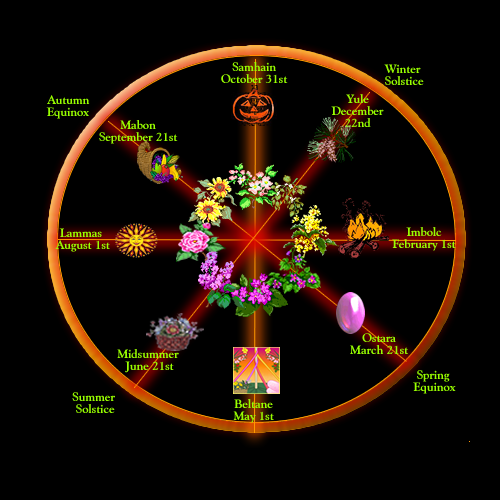
All hallows, All-saints day, now widely known as Halloween generated an estimated $ 9.1 Billion in 2017, growing from $8.4 Billion in 2016. Witches celebrate the end of the year and beginning of the new-year at Samhain. The departed are invited to attend the ceremony which is often held at the closest wane moon to Oct 31. The Old Religion places great store on information received by those who have passed through the veil of death. Sometimes great comfort is provided by this interaction between living and those living beyond death. So, is this a solemn occasion? Well, in part, however, while the giving the living a chance to experience that which lies beyond, there is also the opportunity for the departed to experience life. Life may then take on a sacred experience with a deeper appreciation for all facets of living. Death here, also alludes to ending of relationships, the severing of bonds and perhaps the ‘burning of ships’. Dobelii, (2013) gives an example of burning ships, to ensure progress, rather than keeping many options open and defusing energy.
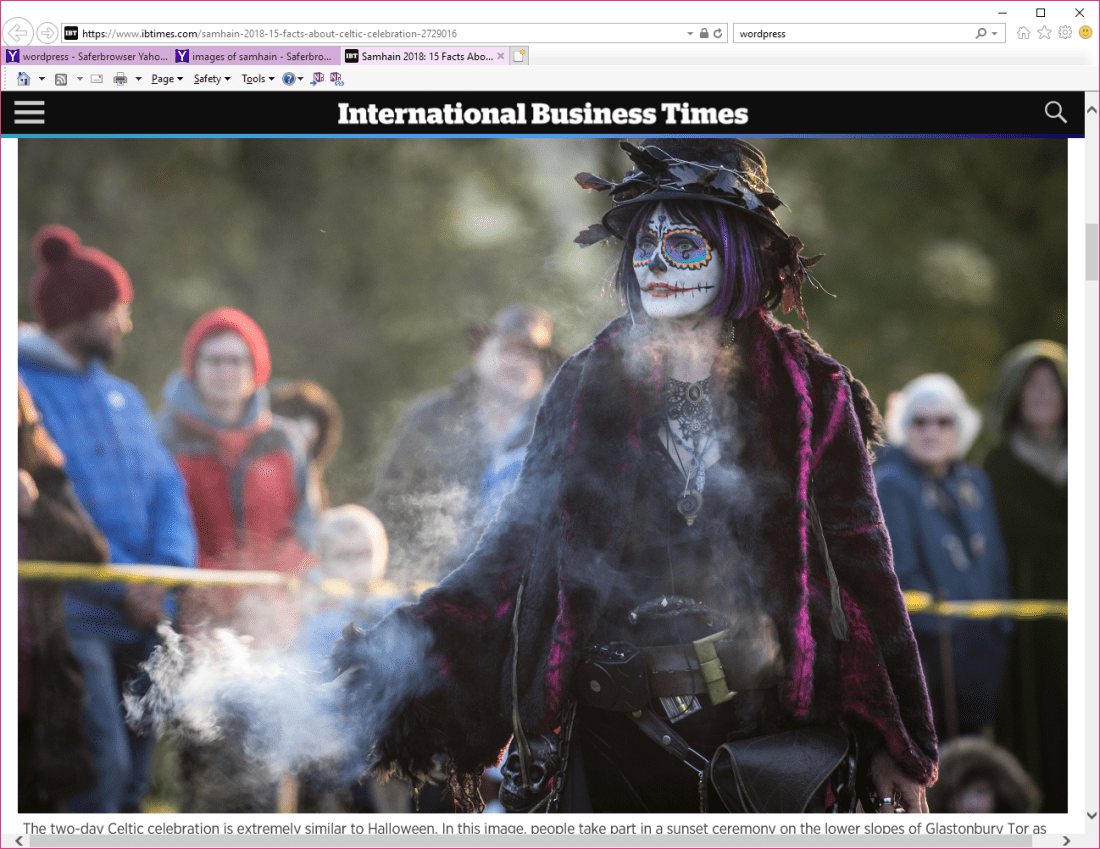
Samhain has been re-branded, in 835 Pope Gregory IV focused on re-branding Samhain as ‘All Hallows’, rather than ban the pagan celebration, Samhain became absorbed by the established Christian religion, Giraudon, D. (2005).

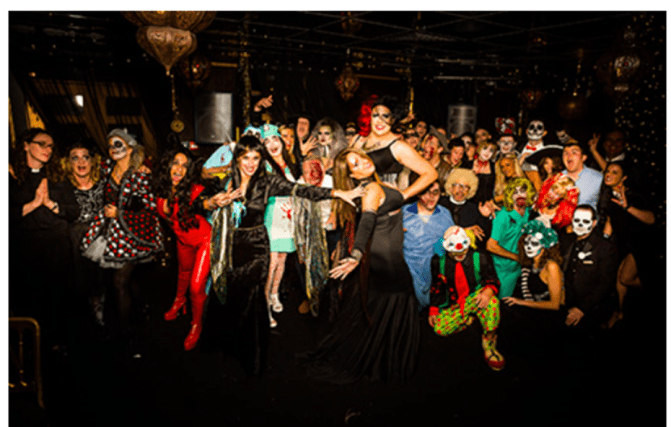
By the 15th century, All Hallows took a darker turn, with witches being blamed for mocking the saints leading to increasing victimisation and prejudice. Late 17th century witnessed the appalling Salem witch trials, which are still in-bedded in folk-lore and legend. From the 18th century All Hallows began to be celebrated with pranks taking on the familiar ‘Trick or Treat’ theme practised to-day.
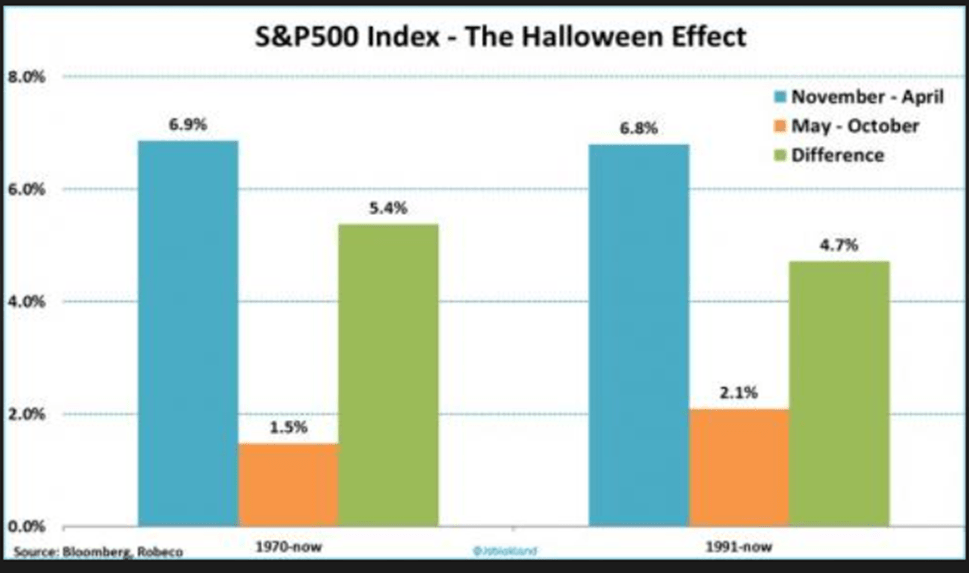
Samhain, reinvented as Halloween, has been paired with business parlance: The Halloween Effect. This effect is the generally recognized condition of the stock market from November to April which is significantly stronger than the remaining months.
Re-branding Universities is an example of taking a system and modifying components to suit the marketization process. One may compare the depth and true inner comprehension of the original Samhain ritual with the ‘luke-warm’, though relatively expensive experience of the consumerized version. Universities are being rebranded by cooperate advertising. By re-branding the academic experience is transformed, although productivity may increase, vocational aspects which provided depth may be lost.

References
Figure 1 accessed 31/10/18: (see below)
https://religiouslyconsuming.video.blog/wp-content/uploads/2018/11/6f19d-wheel.png
Figure 2 accessed 31/10/18: https://www.ibtimes.com/samhain-2014-3-things-you-need-know-about-pagan-festival-1715741
Figure 3 accessed 31/10/18: https://en.wikipedia.org/wiki/Pope_Gregory_IV
Figure 4 accessed 31/10/18: http://festival-collection.com/wp-content/uploads/03/Halloween-Party-Photos-(03).jpg
Figure 5 accessed 31/10/18: https://www.leadingtrader.com/10/the-halloween-effect-and-the-stock-market-the-best-time-to-buy-and-sell-stocks/
Figure 6 accessed 02/11/18: https://creativa.com.au/wp-content/uploads/2015/06/image-1.

 Religiously Consuming

Although I promised you to make a comment to you, I am sorry that I do not make it till today because anything relating to religions seems to be very hard for me to understand…….
Whatever, I like this blog! It seems that some business markets trying to rebrand the definition and the rituals to make people enjoy in the ceremony and willing to spend money for it.Our country also has a similar festival for interaction with the dead. It’s called Qingming festival. But we do not like to rebrand it and make serious period for respecting our ancestors to become too commercialized, though the tickets of tourist attractions always sells better for many Chinese people.
However, I still can find some similar phenomenon of rebranding. Analogous to Halloween, China has created a new festival called “Double Eleven”. At first, it is just a kind of day recreated by dozens of singletons themselves who failed to find girl or boy friends. And gradually, some companies found the huge commercial benefits that they can get from the singles. They rebrand the meaning of the day and announce that all the singletons need to console and comfort themselves by shopping during the day. Therefore, as the number of singletons is increasing in China, many people accepted the idea and start to purchase whatever they want in the day. And of course, most shops make huge discounts for their products. Furthermore, since human have the tendency to mimic each other which called as the herd behavior (Xu, et al., 2017), many other people, such as the old, kids or married persons, also joined in the day of shopping. In the end, “Double eleven”, a day for the singletons celebrating themselves, finally become a holiday for shopping carnival.
During the holiday, in order to make images of the products seem to be fit in the theme of the singletons’ shopping carnival, many not famous brands from other countries rather than China found their methods to rebrand their products. And actually, some of them did very well and have been largely expanded their selling markets in China.
For example, some Korean instant noodles target at the singletons who are busy in working and do not have enough time to cook for themselves. These companies devised advertisements announcing that the noodle is efficient to be cooked and have enough nutrition. They also add some detail description that refers to the sense of warmth and comfort to eat the noodle can makes people feel as if they are being accompanied by a boy or girl friend. The description gives people a sense of belonging and stimulate people want to buy it .
Some products that should not be sold to singles also modified their brand’s proposition and aesthetics to match the theme (Guercini & Ranfagni, 2013). For instance, Dove chocolate which always advertises in China that it’s the best gift to be send girl friends. However, in these days try to persuade those girls who do not have boy friends to buy it for rewarding themselves.
Reference:
Xu, X., Li, Q., Peng, L., Hsia, T. L., Huang, C. J., & Wu, J. H. (2017). The impact of informational incentives and social influence on consumer behavior during Alibaba’s online shopping carnival. Computers in Human Behavior, 76, 245-254.
Guercini, S., & Ranfagni, S. (2013). Integrating country-of-origin image and brand image in corporate rebranding: the case of China. Marketing Intelligence & Planning, 31(5), 508-521.
LikeLiked by 1 person
https://en.wikipedia.org/wiki/Qingming_Festival
https://www.bbc.co.uk/news/world-asia-china-30004583
LikeLiked by 1 person
I absolutely adored this blog. I was captured by the name of your blog especially by the name ‘’religiously consuming’’ mainly because I think that religion is a business.
What really captured my attention about this blog was how you highlighted ‘’The Halloween effect’’ interested me as it dates to the early 1930s! when people would go on a summer holiday and therefore would not trade in stocks (this still exists now) cool if you ask me!
The Halloween effect is fascinating (higher stock returns in November through April than for the rest of the year) also the Halloween effect was evident in 81 out of 108 countries (How cool is that) Something maybe to add to your wonderful blog is that Jacobsen and Zhang also found the effect to be increasing in strength since over the past 50 years, the difference in returns widened to an average of 6.25%! this shows the Halloween effect is still prevalent!
Ultimately the Halloween effect is an anomaly that is important for investors to take note of since it has provided some impressive returns.
Jacobsen, B., & Zhang, C. Y. (2014). The Halloween indicator, ‘Sell in May and go Away’: An Even Bigger Puzzle
.
Bouman, S., & Jacobsen, B. (2002). The Halloween indicator,” Sell in May and go away”: Another puzzle. American Economic Review, 92(5), 1618-1635
LikeLiked by 1 person
This was interesting to know the background of what we now know as Halloween as I did not realise it went back so far. I was fascinated to learn about the Halloween effect, as it isn’t something I have come across before; something to consider if I ever invest in stock.
Interestingly an article that I found, suggest that the effect is not evident in areas of consumer consumption but is within production areas. They also could not explain why this occurs, which I think furthers the spookiness of this effect.
Thank you for this post, it really was insightful and I will leave the article reference below.
Jacobsen, B., & Visaltanachoti, N. (2009). The Halloween effect in US sectors. Financial Review, 44(3), 437-459.
LikeLiked by 1 person